Climate Change and Carbon Trade

Mr. Bob Natifu
AG. Commissioner
The Department of Climate Change and Carbon Trade (DCCCT) welcomes you.
Our mandate is to guide Uganda’s transition towards climate resilience and sustainable, low-carbon development. We coordinate national climate change response actions, promote adaptation and mitigation measures, and support sustainable environmental management.
Working closely with Government institutions, development partners, the private sector and local communities, we strive to reduce climate vulnerability, strengthen preparedness and build resilience to the impacts of climate change. Together, we are committed to protecting our natural ecosystems, promoting sustainable development and securing a climate-resilient future for present and future generations.
Function
1. Carbon Trade including regulations procedures, methodologies, tools and protocols for carbon project initiation, approval, authorization, Corresponding Adjustment, Transfer and benefit sharing arrangements
2. Greenhouse Gas Inventory Management procedures, methodologies, tools and protocols
3. Mitigation assessment and profiling
4. Enhanced Transparency Reporting under the Paris Agreement: Biennial Transparency Reports (BTRs) including methodologies, procedures and Guidelines (MPGs), National Communications (NCs)
5. International climate change obligations, I.e. Subscriptions to International Climate Change Institutions, Preparing Nationally Determined Contributions (NDCs), Long Term Low-Emission Development Strategies (LTS), National Adaptation Plans (NAPs),
6. Accreditation to UNFCCC conferences, Workshops and Events including …
7. Climate Diplomacy, ….Multilateral Negotiations and Bilateral Partnerships and networks under the UNFCCC Subsidiary Bodies Conferences and the Conference of the Parties
8. Develop and implement Mitigation and adaptation projects
9. Piloting climate change adaptation and mitigation technologies and innovations
10. Co-creating climate change information and knowledge management
11. Public awareness capacity-building and stakeholder engagements for climate action
12. Preparing climate change plans, strategies and reports in fulfilment of Uganda’s commitments under multilateral agreements and treaties (Nationally Determined Contributions, National Adaptation Plans, National Communications, Biennial Transparency reports
13. Climate change human mobility nexus (migration and forced displacement)
14. Assessment certification of the national budget for compliance with climate change mainstreaming requirements – Annual Certificate of climate change compliance of the National Budget Framework Paper to Climate change mainstreaming requirement (CoCC)
15. Assessment of the loss and damage caused by climate change, extreme and slow onset events
16. Climate resilient planning – Climate risk and vulnerability assessment
17. Direct access entity for climate financing – Green Climate Fund (GCF), Adaptation Fund (AF), Fund for Responding to Loss and Damage (FRLD). Preparing bankable climate change projects
Mandate
About
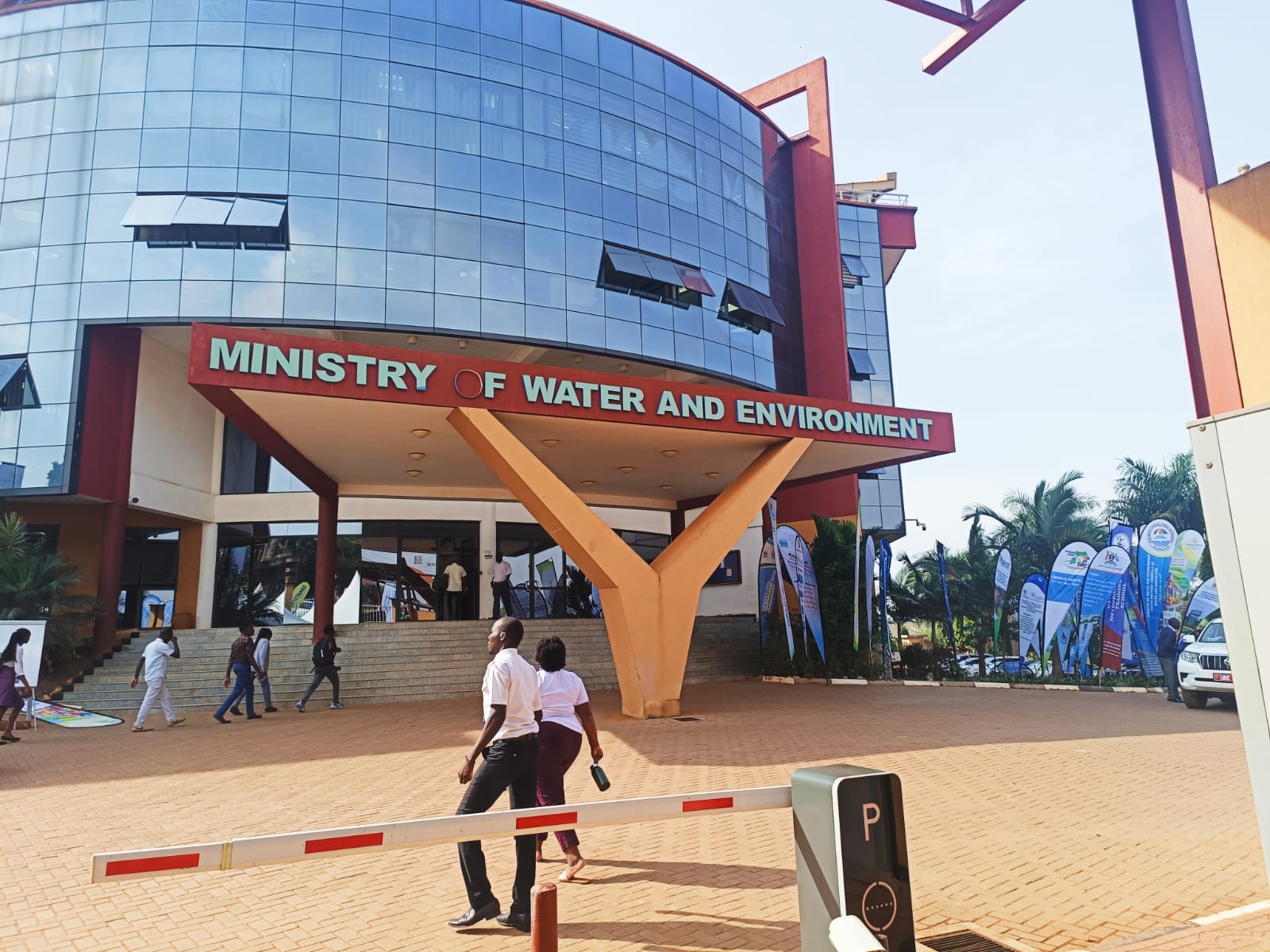
The Department of Climate Change and Carbon Trade (DCCCT) is one of the 11 technical departments under the Ministry of Water and Environment (MWE). Established as a Unit in 2008 and elevated to departmental status in 2016, it operates under the Ministry’s revised 2026 macro structure following the Government-wide rationalisation of public expenditure and institutional structures. Its key partners and stakeholders include MWE Headquarters and regional offices, 146 District Local Governments, 11 cities, 42 municipalities, 357 town councils, sub-county local governments, parishes and communities across Uganda’s 58,197 villages.
Divisions
3 Divisions


Related Projects
6 Projects
Investing in Forest and Protected Areas for Climate Smart Development Project
Least Developed Countries (LDC) Initiative for Effective Adaptation and Resilience
Biennial Update Report
ICAT Phase 2
Capacity Building Initiative for Transparency Phase II
Local Climate Adaptive Living Facility
Publications
- WASH National Adaptation Plan for Uganda (2026-2030) Publications · 2026
- Update on the Nationally Determined Contribution(NDC) 3.0 Water Week · 2026
- Post COP30 Dialogue Water Week · 2026
- Post COP30 Poster Publications · 2026
- Tropical Forest Forever Facility (TFFF) Publications · 2026
- Occupational Health and Safety Measures(OHS) - Nov 2021 IFPA-CD Reports · 2025
- Mgahinga Validated VMGP IFPA-CD_DEC 2025 Reports · 2025
- Echuya Validated VMGP IFPA-CD_DEC 2025 Reports · 2025
- Bwindi Validated VMGP IFPA-CD_DEC 2025 Reports · 2025
- Semuliki Validated VMGP FINAL -IFPA-CD-DEC 2025 Reports · 2025
- Gender Action Plan(GAP) for IFPA-CD Project Reports · 2025
- Process Framework-Dec 2019 IFPA-CD Reports · 2025
- Mid-Term Evaluation Report (MTR) -April 2024- IFPA-CD Project Reports · 2025
- Labour Management Procedures(LMP)-Jan 2020 for IFPA-CD Project Reports · 2025
- Grievance Redress Mechanism for IFPA-CD Project Reports · 2025
- ENVIRONMENTAL AND SOCIAL COMMITMENT PLAN (ESCP) -May 2025 IFPA-CD Reports · 2025
- Environmental and Social Management Framework-IFPA-CD May 2024 Reports · 2025
- Uganda's Second Biennial Update Report to the United Nations Framework Convention on Climate Change Reports · 2025
- The National Climate Change (Climate Change Mechanisms) Regulations, 2025 Laws & Policies · 2025
- National Climate Change Act 2021 Laws & Policies · 2021
- Financing Agreement- with signed minutes & Attachments IFPA-CD Project Reports · 2020
- Uganda's First Biennial Update Report to the United Nations Framework Convention on Climate Change Reports · 2019
- Uganda National Climate Change Policy Laws & Policies · 2015
- Uganda Second National Communication to the United Nations Framework Convention on Climate Change Reports · 2014
- No publications match your search.