
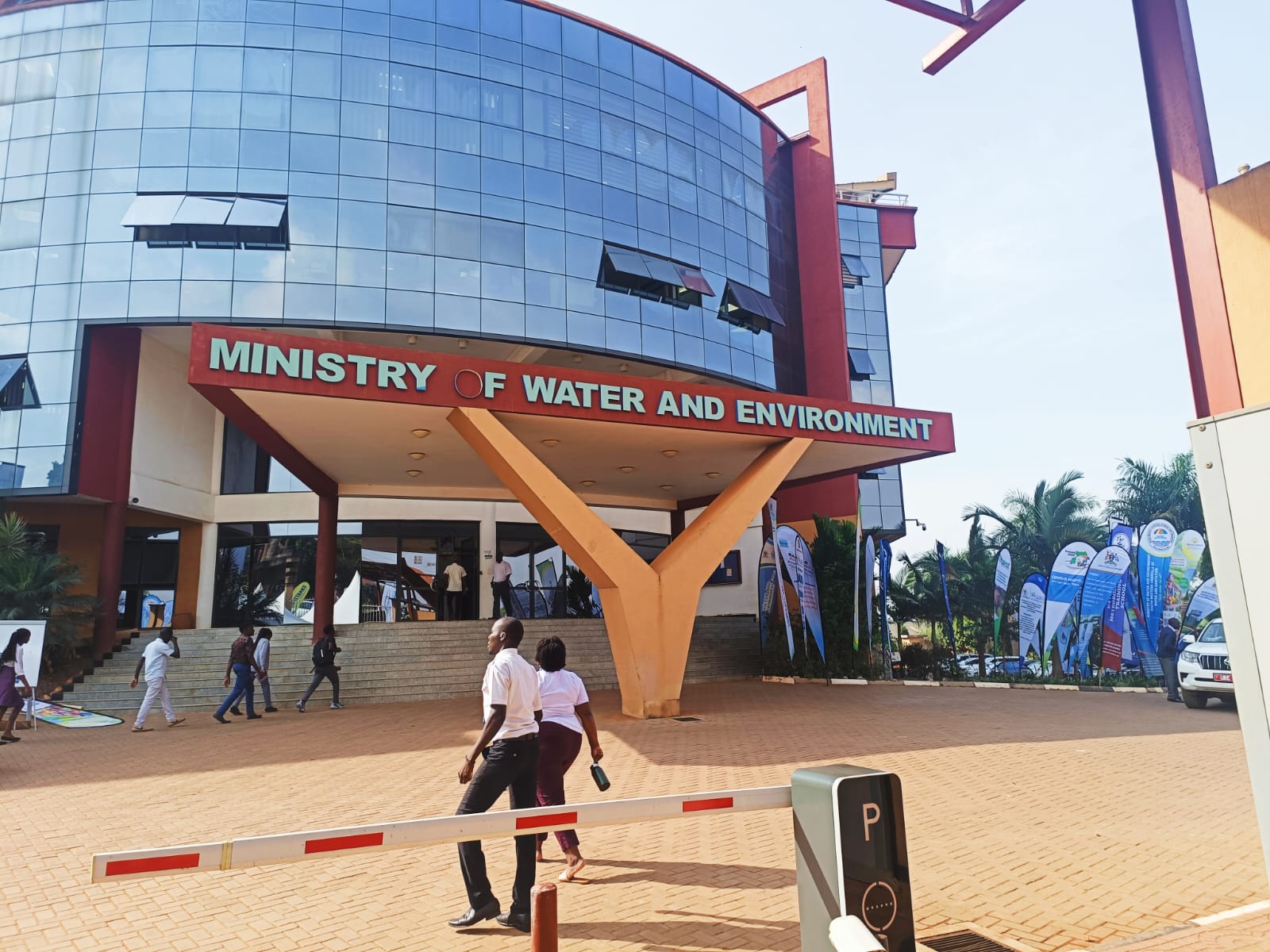
MWE Headquarters

Publications & Documents

7 publications found
Economic Study for Water and Environment Sector-Uganda Factsheet A3

This analysis models the GDP effects of MWE investment across ten channels of economic impact. First, biophysical and reduced form models are employed to understand the impacts of management decisions. The results of these models are then input to an economy-wide model to estimate the overall economic impacts of MWE investment.

• 1.80 MB
Download
Irrigation Development in Uganda_Constraints, Lessons Learned, and Future Perspectives

Policy makers in sub-Saharan African (SSA) countries have identified irrigation as a key ingredient to boosting food security and income as well as a precursor for agricultural development. However, most SSA countries have hardly exploited their irrigation potential. The overarching aim of this paper is to critically examine factors constraining exploitation of irrigation potential in Uganda. Lessons learned from previous interventions and successes elsewhere from countries comparable to Uganda are drawn and future perspectives to guide effective irrigation planning and development are recommended.

• 0.37 MB
Download
2015_Mainstreaming Climate Change Into Integrated Water Management Planning for Uganda _Proposed revisions of the Mpanga Catchment Management Plan (D1)

In 2008, the Directorate of Water Resources Management (DWRM) and the Ministry of Water and Environment (MWE) adopted a strategy to de-concentrate IWRM at the regional and river basin or catchment level with central oversight and guidance. One of the mains reasons behind this strategy is that it brings IWRM functions closer to stakeholders (farmers, townspeople, local government officials, etc.). Doing this helps to concentrate the focus onto real problems, to improve the analytical underpinnings of programs and projects and it also provides the opportunity for stakeholders to participate in the formulation of plans and the development of new water infrastructure.

• 0.50 MB
Download
Economic Study for water and environment sector-Uganda Factsheet A4

Results of a national integrated bio-physical/economic modeling framework show that from 2015 to 2040 enhanced investment by the Ministry of Water and Environment (MWE) in Water Resource Development and Environmental Management can increase per capita GDP by 9% in 2040. Water resource development investments contribute 45% of this increase, while wetland protection and land management investments (especially efforts to switch away from firewood for cookstoves) yield 55% of the total benefit.

• 0.29 MB
Download
Economic Study 2018-Contribution of Water Development and Environment Resources to Ugandas Economy

The study is a partnership between the Industrial Economics (IEc) expert team and staff, the Ministry of Water and Environment (MWE) team, and other local counterparts in Uganda. From the government of Uganda, we are grateful for policy guidance and technical support provided by the Ministry of Water and Environment, the Ministry of Energy and Minerals Development, the Ministry of Finance, Planning and Economic Development, the Nile Basin Initiative, and to the study focal points within these Ministries whose participation made this study possible.

• 1.14 MB
Download

This volume is a product of the staff of the International Bank for Reconstruction and Development/ The World Bank. The findings, interpretatioand conclusions expressed in this paper do not necessarily reflect the views of the Executive Directors of The World Bank or the governments threpresent. The World Bank does not guarantee the accuracy of the data included in this work. The boundaries, colors, denominations, and otinformation shown on any map in this work do not imply any judgment on the part of The World Bank concerning the legal status of any territory the endorsement or acceptance of such boundaries.

• 0.88 MB
Download