Uganda is strengthening its fight against forest and wildlife crime through closer inter-agency collaboration, stronger legal frameworks, improved enforcement capacity and investment in timber forensics, as Government and development partners intensify efforts to protect the country’s forest resources.
The 7th Component Technical Committee (CTC) Meeting under the European Union - Uganda Forestry Partnership and Programme – under the Partnering for Forests development programme, focusing on the role of the United Nations Office on Drugs and Crime (UNODC), concluded at the Uganda Wildlife Education Centre (UWEC) Administration Block in Entebbe.
The meeting brought together representatives from Government Ministries, Departments and Agencies, civil society organisations, including the Anti-Corruption Coalition Uganda (ACCU) and Environmental Alert, and development partners including the European Union (EU), Italian Agency for Development Cooperation (AICS), Embassy of Denmark in Uganda, Global Green Growth Institute (GGGI), United Nations Capital Development Fund (UNCDF), Food and Agriculture Organization of the United Nations (FAO) and the Convention on International Trade in Endangered Species of Wild Fauna and Flora (CITES).
The meeting was chaired by Bob Kazungu, Assistant Commissioner in charge of Forest Resources at the Ministry of Water and Environment, and co-chaired by Jalia Kobusinge, Advisor, Green Transition, Private Sector Team at the EU Delegation in Uganda.
Kazungu said the composition of the CTC was deliberate because combating forest and wildlife crime requires coordinated action by institutions with complementary mandates.
“We must appreciate that these components speak to each other,” Kazungu said, emphasizing the need for stronger collaboration across forestry, justice, law enforcement and environmental institutions.
He highlighted progress made under the programme, including the provision of ICT equipment to the Judiciary and the establishment and strengthening of the Timber Forensics Laboratory in Entebbe, which provides scientific support for investigating and prosecuting timber-related offences.
Kobusinge called for stronger commitment from CTC members, urging regular participation and prioritisation of issues jointly agreed upon by the Government of Uganda and the European Union.
She emphasized that consistent engagement among partners is critical to translating programme commitments into practical and measurable action.
Alejandra Euceda, UNODC Programme Coordinator, Border Management Branch, Programme Office in Uganda, Division for Operations, highlighted the importance of strengthening Uganda’s legal and institutional capacity to prevent, investigate and prosecute forest and wildlife crimes.
Euceda pointed to the review of the National Forestry and Tree Planting Act, development of legal guidance documents and capacity-building packages for investigators, prosecutors, law enforcement officers and other justice-sector actors.
She also highlighted the importance of Judiciary training, timber forensics, Independent Forest Monitoring (IFM), corruption risk management, land management and stronger inter-agency collaboration at national and sub-national levels which have been done and some are ongoing under the programme.
Euceda noted progress towards strengthening national coordination against wildlife crime through the National Anti-Wildlife Crime Coordination Task Force, alongside increased engagement with civil society and collaboration with countries along timber and wildlife supply chains, including countries of origin, transit and destination.
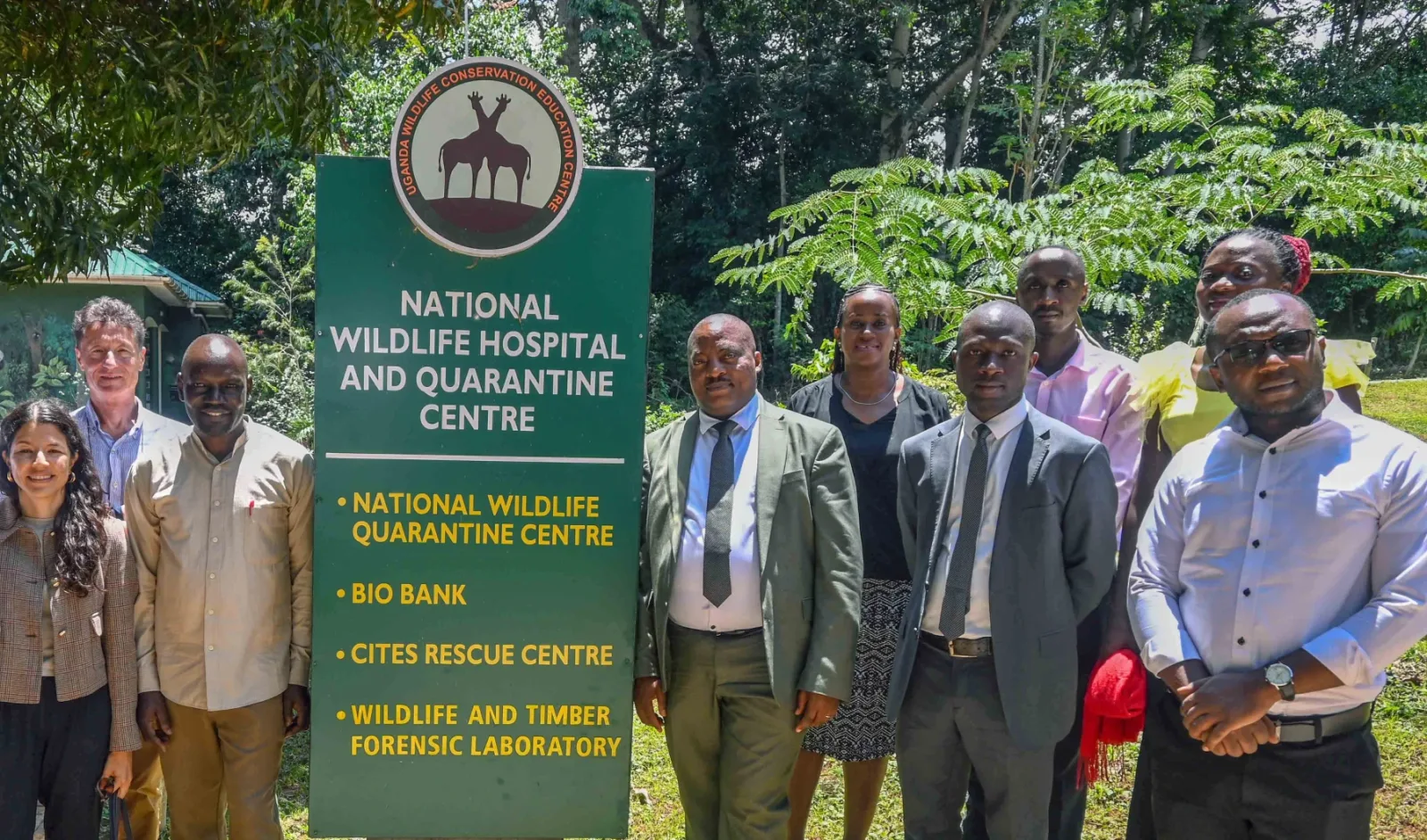
Following the CTC meeting, members visited the Timber Forensics Laboratory in Entebbe, where they were taken through how forensic science can support the identification and analysis of timber, generate credible evidence and strengthen investigations and prosecution of forestry-related offences.
The visit demonstrated the growing role of science and technology in combating illegal timber trade and strengthening forest governance.
The CTC meeting and laboratory visit underscored a critical message: protecting Uganda’s forests requires more than enforcement in the field. It requires strong laws, scientific evidence, capable institutions and coordinated justice systems that can trace forest crime from illegal extraction through the wider supply chain.
The Partnering for Forests Development Programme is supported by the European Union and implemented in partnership with the Government of Uganda and other participating institutions and development partners.