Antalya, Türkiye – November 12, 2026. Uganda has called for tangible outcomes from the ongoing 31st Conference of the Parties to the United Nations Framework Convention on Climate Change (COP31), urging its delegation to prioritise climate finance, strategic partnerships and practical actions that address the country's climate change challenges.
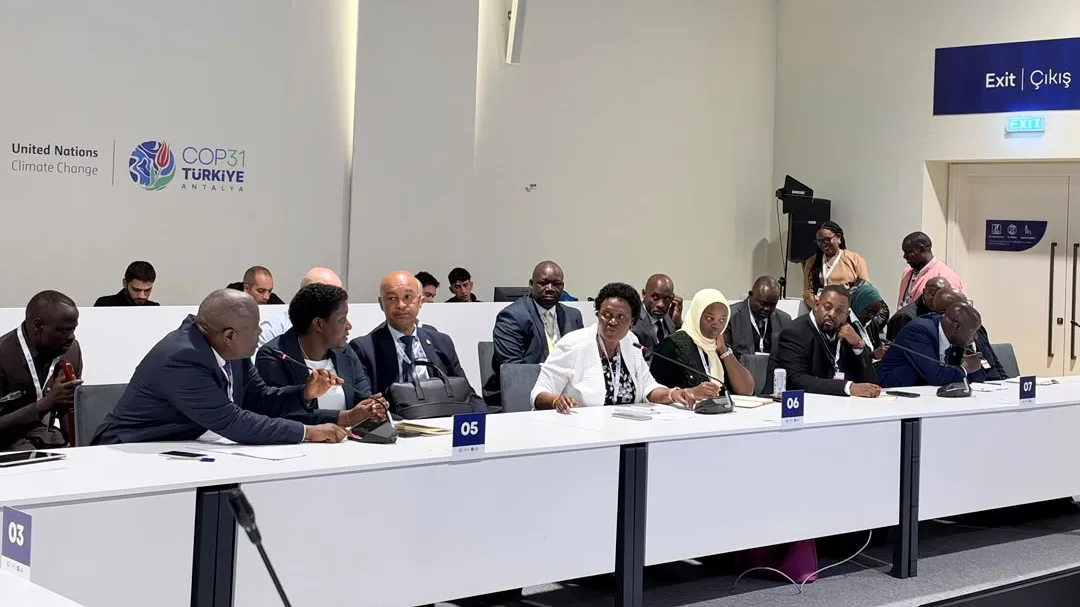
The call was made by the Minister for Water and Environment, Hon. Beatrice Anywar Atim, while addressing Uganda's delegation during its first coordination meeting at Meeting Room 11 in Antalya, Türkiye, on Thursday, November 12, 2026.
Leading Uganda's delegation as Head of Delegation, Minister Anywar emphasised that the country's participation at COP31 must go beyond attending meetings and making statements, and instead focus on securing meaningful outcomes that translate international climate commitments into action on the ground.
"The big question at the end of COP31 will be: What will Uganda take home?" the Minister asked, challenging delegates to ensure that their engagements, negotiations and partnerships deliver tangible benefits for the country.
She noted that Uganda's participation has the full backing of the Government, with President Yoweri Kaguta Museveni having delegated her to lead the national delegation due to other equally important State obligations. She conveyed the President's position that Uganda supports a global climate response that is equitable, adequately financed and responsive to the circumstances and development needs of ordinary citizens.
Uganda prioritises climate finance and international partnerships
The Minister underscored the importance of climate finance as a critical enabler of climate action, calling on delegates to use COP31 to engage countries, international climate finance institutions and development partners to unlock resources for Uganda's climate programmes and investment priorities.
She noted that developing countries such as Uganda require adequate and accessible financing to strengthen their capacity to respond to climate change while pursuing sustainable economic development.
Her remarks come at a time when climate finance, adaptation and technology transfer are among the major issues shaping discussions at COP31, which is taking place from November 9–20, 2026. For Uganda, the negotiations present an opportunity to advocate for increased support to address climate-related challenges, including floods, prolonged droughts, landslides and environmental degradation that affect communities, agriculture, water resources and infrastructure.
Minister Anywar urged Uganda's delegation to work closely with the African Group of Negotiators, the G77 and China, and the Least Developed Countries Group to advance shared interests and strengthen the country's negotiating position.
She also highlighted Uganda's strategic advantage in the negotiations through the participation of Foreign Affairs Minister, Ambassador Adonia Ayebare, who is serving as Chair of a UNFCCC Subsidiary Body, alongside Ugandan representatives serving on various climate committees and working groups.
The Minister called for coordinated, consistent and strategic interventions informed by Uganda's national circumstances and development priorities. Emphasising the importance of a united national voice, Minister Anywar called on all members of the multi-stakeholder delegation to play their respective roles in advancing Uganda's climate agenda.
She highlighted the contribution of Members of Parliament in linking international climate commitments to national legislation, budgeting, oversight and accountability, while Ministries, Departments and Agencies were urged to identify opportunities for implementation within their respective mandates.
The Minister further encouraged delegates to use the Uganda Pavilion, established by the Ministry of Water and Environment with support from the Uganda Development Bank (UDB), Uganda Communications Commission (UCC) and the Presidential Initiative on Banana Industrial Development (PIBID), as a strategic platform for showcasing the country's climate initiatives, attracting investment, building partnerships and promoting Uganda's progress in climate action.
The pavilion is already providing a platform for Uganda to engage international stakeholders, showcase national initiatives and explore opportunities for climate finance, technology transfer and investment.
Seven priority areas to guide Uganda's negotiations
To strengthen the country's negotiating approach, the Minister reminded delegates of the seven thematic areas for which dedicated lead negotiators have been appointed:
1. Adaptation
2. Mitigation
3. Climate finance
4. Capacity-building
5. Technology development and transfer
6. Gender
7. Compliance and legal matters.
She directed the thematic leads to provide concise progress reports during the next delegation coordination meeting, emphasising that Uganda's success at COP31 should be measured by the quality of negotiated outcomes, partnerships established, resources mobilised and progress towards implementing national climate priorities.
Minister Anywar also encouraged delegates, particularly those participating in international climate negotiations for the first time, to support one another, share information and maintain close coordination throughout the conference.
Acknowledging the logistical challenges faced by some members, including long distances between accommodation and the conference venue and the demanding nature of negotiations, she urged the delegation to remain united and focused on the national interest.
"This is the sacrifice we must make for the good of the 46 million Ugandans who are not able to be here," she said.
Uganda seeks to turn COP31 outcomes into national action
The Minister called upon all delegates to demonstrate professionalism, discipline, unity and commitment, reminding them that they represent one country and must speak with one voice.
She further emphasised the need for institutions to collectively identify and implement actions arising from the conference, ensuring that Uganda's participation translates into tangible national benefits.
Uganda's engagement at COP31 is particularly significant as the country seeks to strengthen climate resilience, mobilise international financing, promote sustainable investments and protect livelihoods that depend on agriculture, forests, water resources and other natural ecosystems.
As the negotiations continue in Antalya, the Government's message is clear: Uganda is not at COP31 merely to participate in global discussions, but to advocate for fair climate action, secure meaningful partnerships and mobilise the resources needed to deliver its national climate commitments.
The country is therefore looking towards the remaining days of COP31 with a clear expectation that international commitments must translate into practical solutions that improve the lives of Ugandans and support a sustainable, climate-resilient future.
Minister Anywar concluded by thanking the delegation for its commitment to Uganda's climate change agenda and wishing members productive deliberations and successful engagements.