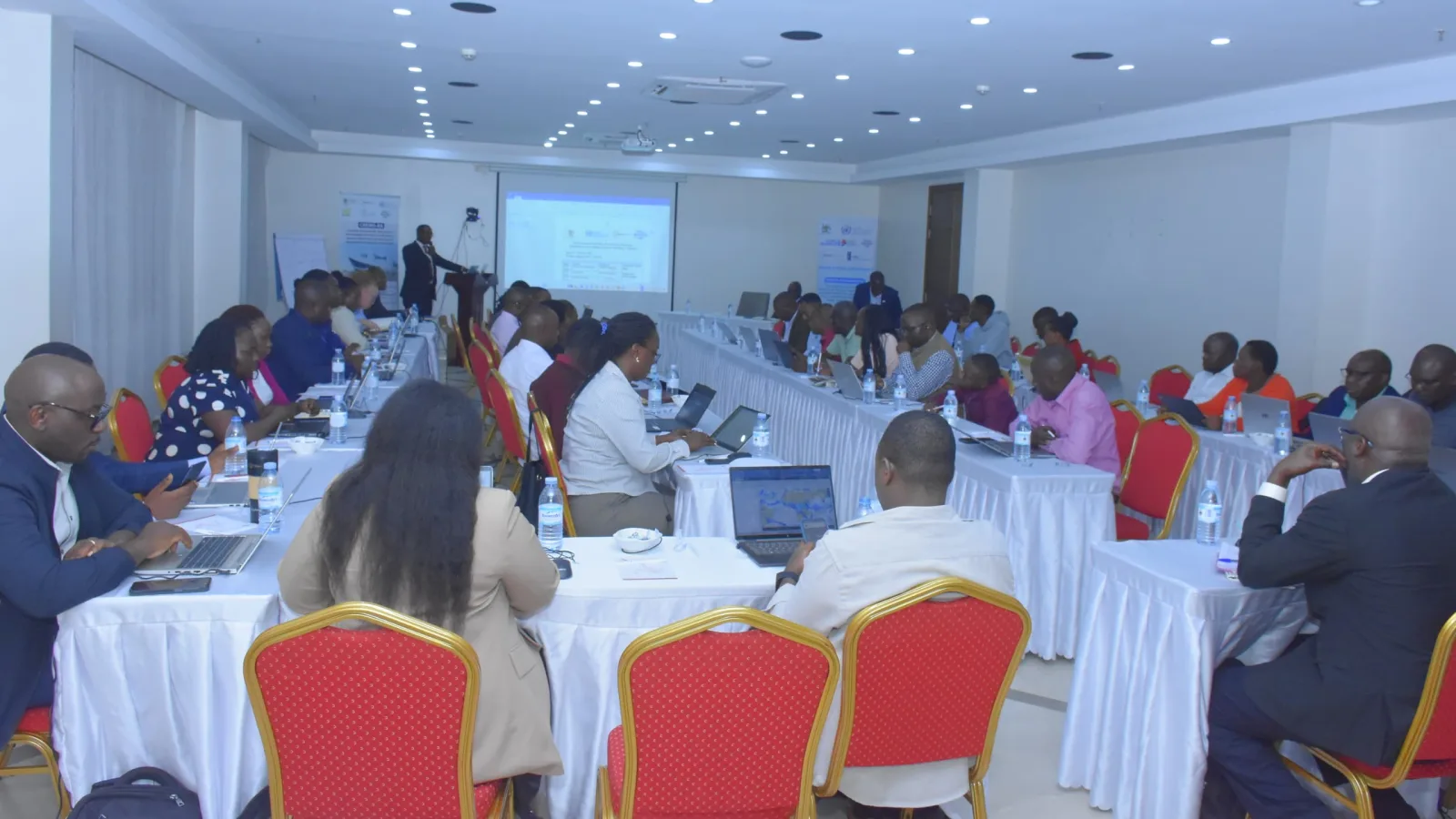
The Department of Meteorological Services under the Ministry of Water and Environment organized a Validation Workshop on inclusive Early Warning Systems.
The workshop was held at Admas Hotel in Entebbe and drew a diverse group of stakeholders. In attendance were representatives from Tanzania, Burundi and Rwanda, alongside delegates from other EAC Partner States, UN Women, MDAs, Civil Society Organizations (CSOs) and development partners.
The meeting comes at a time when the region continues to face growing threats from floods, droughts, storms, landslides and extreme heat. These hazards, worsened by climate change, continue to put lives and livelihoods at risk.
To respond to this challenge, EAC leaders directed the Secretariat to develop a long-term plan - the EAC Early Warning Systems Vision 2035. With technical support from the World Meteorological Organization (WMO), the Vision will guide how the region predicts, prepares for, and responds to disasters.
Dr. Bob Alex Ogwang, Commissioner DMS and Uganda's Permanent Representative to WMO, officially opened the workshop to validate Uganda's Gender Action Plan and country-level Socio-Economic Benefits of hydromet services.He stressed that while UNMA's forecasts save lives but their value remains invisible, rising extremes like the Mbale floods demand stronger investment in the 4 pillars of early warning, co-produced advisories, and accessible communication like the 901 code to protect all Ugandans. From WMO, Key technical presentations were delivered by Mr. Juan Pablo Romero Rodriguez and Dr. Godwin Ayebare, among other experts.
Discussions focused on three linked priorities.
First, making early warning inclusive - reviewing the Gender Action Plan and agreeing on priorities that ensure warnings reach women, youth, persons with disabilities and other vulnerable groups.
Second, building the investment case - defining how to measure the social and economic benefits of weather and climate services.
Third, planning for the future - agreeing on a clear roadmap for developing the EWS Vision 2035.
Through group work and plenary discussions, participants enriched the documents and built consensus.
By the end, three clear outcomes were achieved: common priorities for inclusive early warning, a practical action plan showing who will do what and by when, and an adopted roadmap for the EWS Vision 2035 that will be presented to the Sectoral Council for approval.
The meeting was a demonstration of strong regional teamwork and a shared commitment to ensure that no one is left behind when disaster strikes.