Tagged “Forestry”

52 publications found
Ecotourism
Publications

Ecotourism

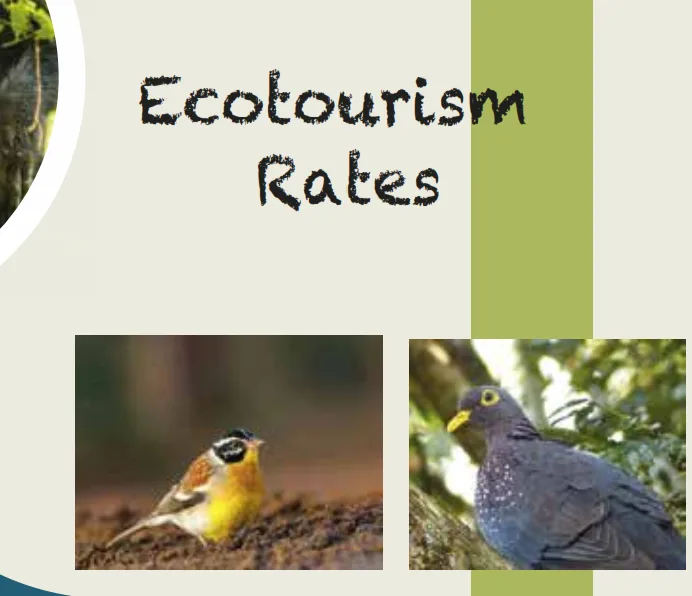
The Ministry of Water and Environment, through the Department of Forestry Management, is promoting ecotourism in Central Forest Reserves as a way of increasing appreciation and conservation of forests while creating opportunities for communities, tourism operators and other stakeholders.

119 KB Sep 2026
Download • 5 downloads

The Land Management Licensing System is an online platform managed by the Department of Forestry Management to facilitate the application, processing and management of licenses and permits for approved activities on forest land.

6 KB Sep 2026
Download • 5 downloads
Publications

Forest Management

Forest management focuses on conservation of natural forests, restoration of degraded areas, sustainable forest utilisation, plantation development, biodiversity conservation, protection of water catchments and other critical ecosystems, and promotion of community participation. Forest Management Plans provide a framework for guiding the management, protection, development and utilisation of individual forest reserves.

93 KB Sep 2026
Download • 5 downloads

The Ministry of Water and Environment through the Department of Forestry Management Range Offices serves as field coordination centres for the management, protection and development of Uganda's forest resources. They provide technical support, coordinate forest management activities and facilitate engagement with local governments, communities, private sector actors and other forestry stakeholders.

105 KB Sep 2026
Download • 5 downloads
Running Out of Trees Newsletter August 2026

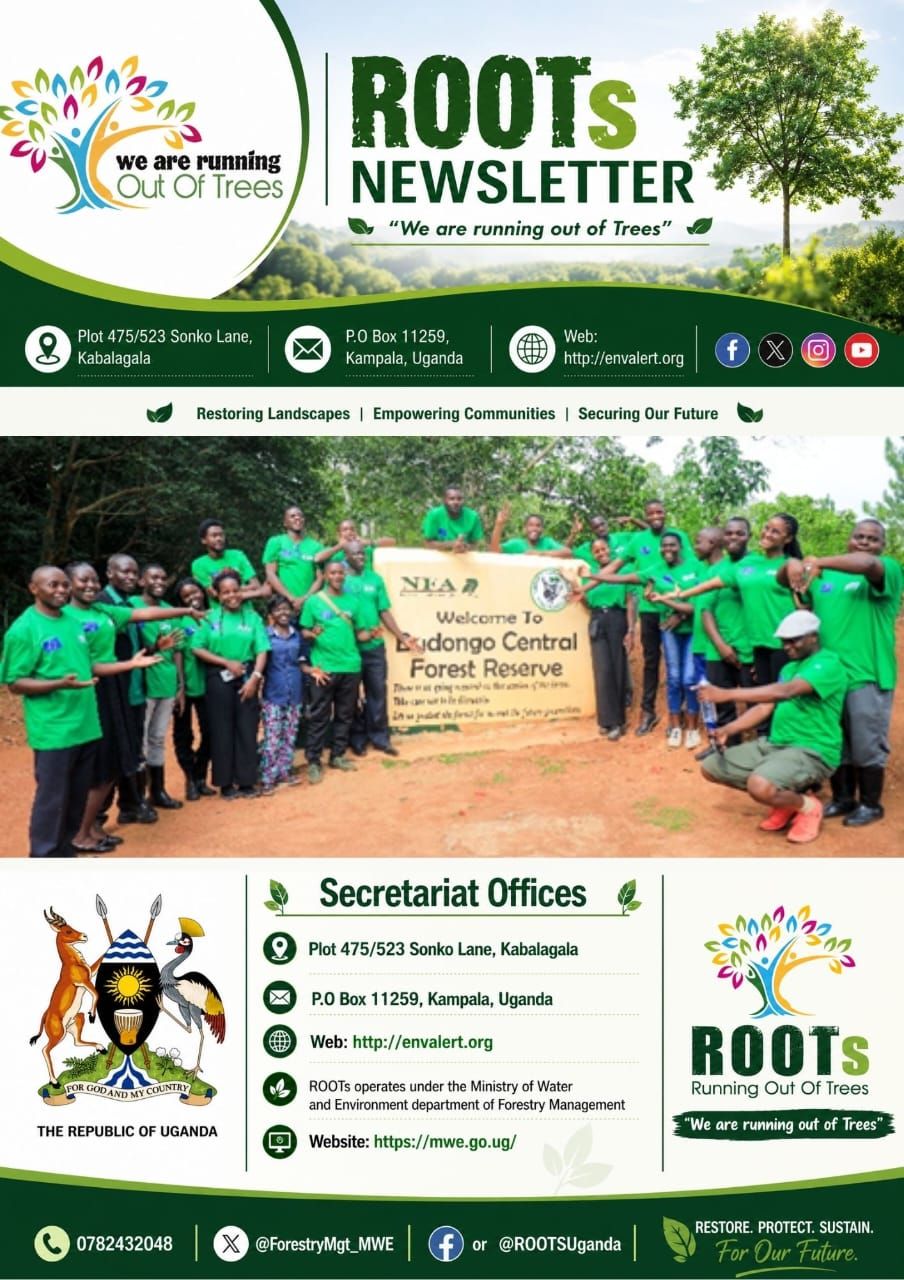
Over the past five years, two of them during a pandemic, the ROOTs Campaign has united schools, cultural and religious institutions, local governments, businesses and citizens around a common purpose. Together, we have planted more than 82 million tree seedlings in over 130 different species, proving that when Ugandans work together, remarkable transformation is possible, embracing one tree at a time.

3.4 MB Sep 2026
Download • 359 downloads
Running Out Of Trees Newsletter - July 2026

Over the past five years, two of them during a pandemic, the ROOTs Campaign has united schools, cultural and religious institutions, local governments, businesses and citizens around a common purpose. Together, we have planted more than 82 million tree seedlings in over 130 different species, proving that when Ugandans work together, remarkable transformation is possible, embracing one tree at a time.

2.9 MB Aug 2026
Download • 525 downloads

This policy brief summarises options and strategies for a long-term sustainable financing mechanism/ model for plantation forestry development in Uganda to wean the subsector from short term project-based financing borrowing lessons from Uganda, the region (East Africa), Africa and globally. It was prepared by the Ministry of Water and Environment through the findings of a study supported by the Uganda Investing in Forests and Protected Areas for Climate-Smart Development (IFPA-CD) Project with funding from the Word Bank and Government of Uganda.

562 KB Jul 2026
Download • 532 downloads
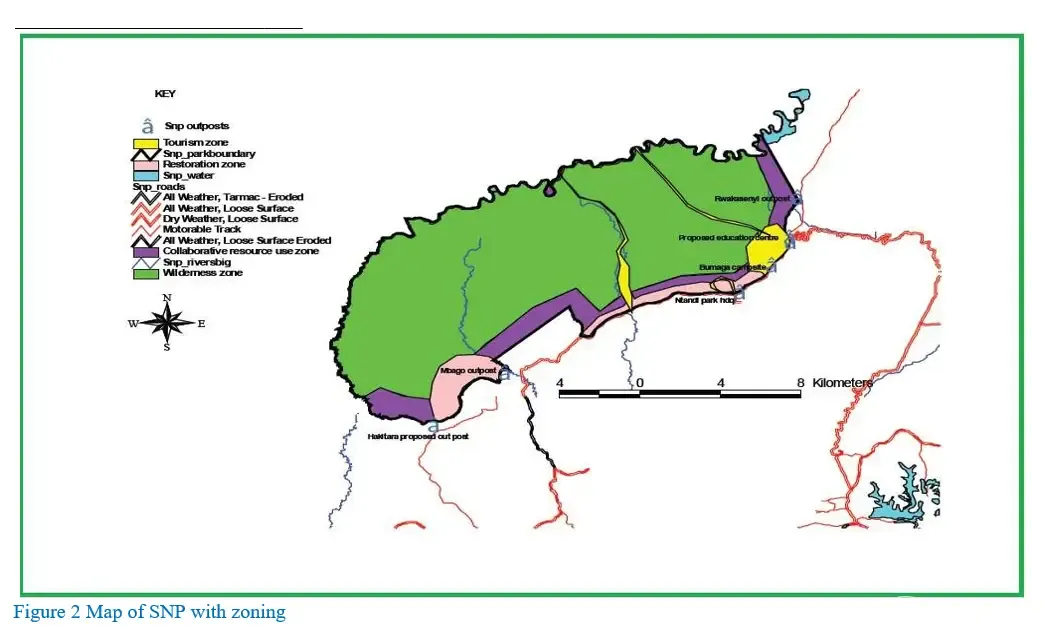
Vulnerable and Marginalized Groups Plan   for the Batwa around Semuliki National Park

The Government of Uganda (GoU) is implementing the “Investing in Forests and Protected Areas for Climate-Smart Development (IFPA-CD or Project) Project”. The project is financed by the International Development Association (IDA) of the World Bank (with financing of US$148.2 million equivalent). The implementation of the project is led by the Ministry of Water and Environment (MWE), Uganda Wildlife Authority (UWA), and the National Forestry Authority (NFA). As of August 31, 2025, the NFA has been mainstreamed into MWE. Therefore, throughout this document, all subsequent references to this entity will be noted as MWE/ex-NFA to accurately reflect this organizational change. The project was approved in April 2020, became effective in August 2021, and closes on June 30, 2026.

625 KB Jun 2026
Download • 1,069 downloads
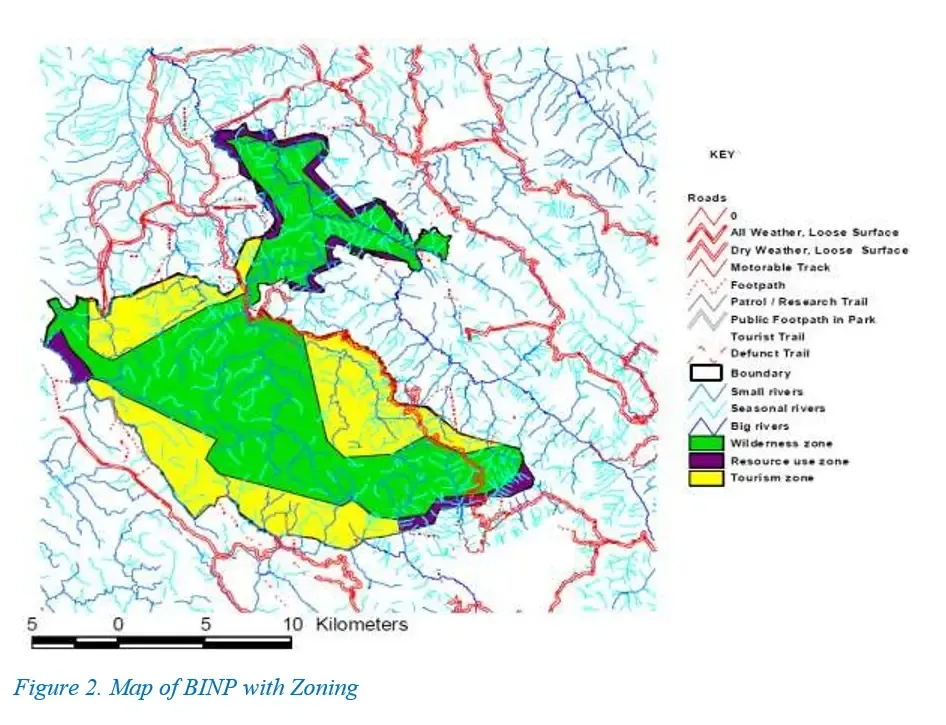
Vulnerable and Marginalized Groups Plan for the Batwa around the Bwindi Impenetrable National Park

The BINP was originally established as the Bwindi (Impenetrable) Forest Reserve in 1932. Later it was established as a Gorilla Sanctuary by General Notice No. 584 of 1961 and amended by Legal Notice No. 53 of 1962, Legal Notice No. 567 of 1962 and Statutory Instrument No. 10 of 1964 (Protected Area System Plan for Uganda Vol. 4, 1999). The Impenetrable Forest came under National Park status by resolution of the National Resistance Council of 13th August 1991 and became known as BINP under Statutory Instrument Supplement No.3 of 1992.

612 KB Jun 2026
Download • 648 downloads
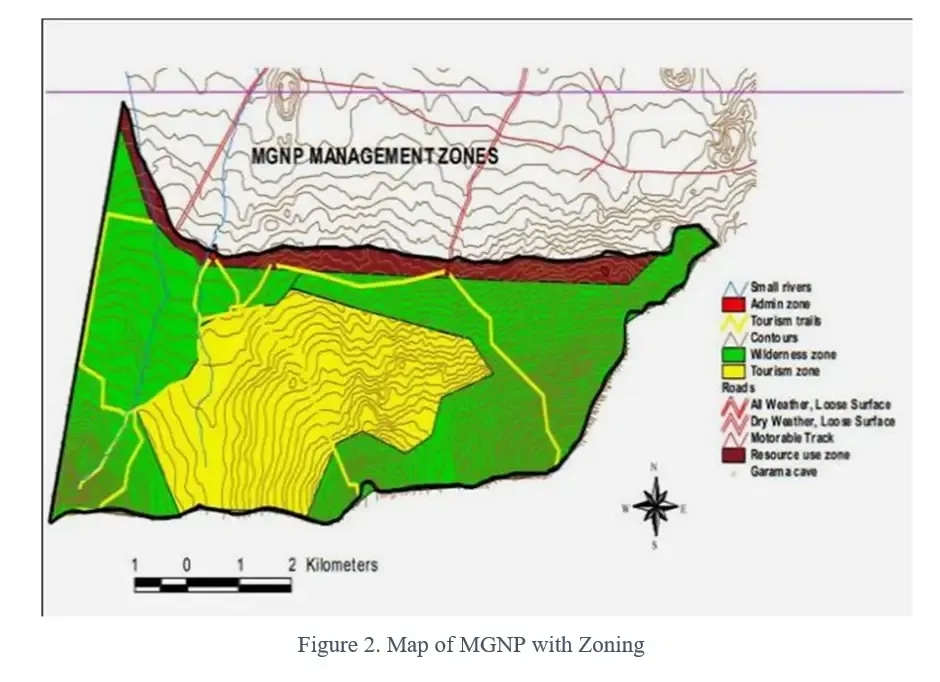
Revised Vulnerable and Marginalized Groups Plan for the Batwa around the Mgahinga Gorilla National Park

MGNP is located in the extreme south-western corner of Uganda between latitude -1.33 to -1.38 South and longitude 29.6o to 29.7o East. The area was originally established as a Forest Reserve. A Sanctuary to protect gorillas was established by Legal Notice 21 of 1930, the area being upgraded to Game Reserve Status by Statutory Instrument (SI) No. 216 of 1964 (substituted by SI No. 136 of 1965). The National Park was established by SI No. 27 of 1991, amended by SI No. 3 of 1992. At 33.7 km2, MGNP is Uganda’s smallest national park. By the late 1980s the area was severely encroached. After the area was upgraded to a National Park in 1991 the encroaching families were relocated.

573 KB Jun 2026
Download • 737 downloads
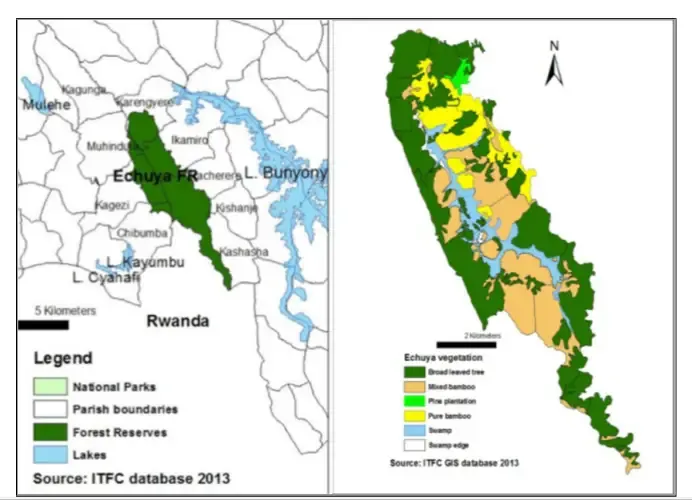
Vulnerable and Marginalized Groups Plan for the Batwa around Echuya Central Forest Reserve

The Echuya Forest Reserve was constituted in 1939 and was first gazetted and declared as undemarcated crown forest of 4,144 ha in 1941. It was demarcated in 1944 and re-gazetted as a Central Forest Reserve by Legal Notice No. 41 of 1948 with an area of 3,403 Ha. Management is vested in the Ministry of Water and Environment (ex NFA) under Section 54(i) of the National Forestry and Tree Planting Act 2003, while Section 33(1) stipulates rights and privileges of communities.

660 KB Jun 2026
Download • 478 downloads

UGANDA’S FORESTS ARE PROVING THAT CLIMATE FINANCE CAN WORK, IF THE WORLD IS PAYING ATTENTION Loss has dominated conversations about tropical forests for many years. Declining tree cover, rising emissions, and the pressure on governments struggling to balance development with conservation have shaped the narrative. Uganda knows these challenges well. But the global discussion often omits how countries are responding and the progress being made.

244 KB Mar 2026
Download • 964 downloads
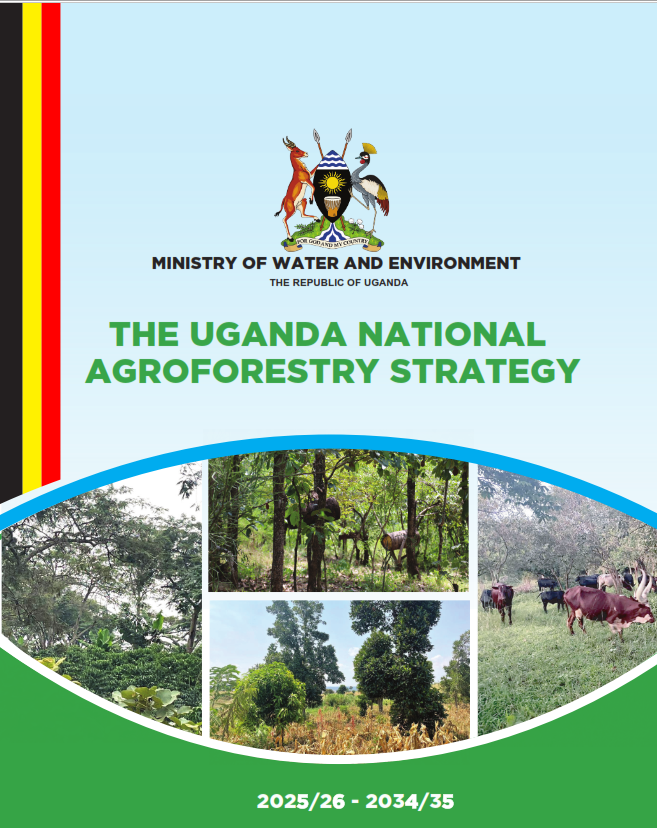
Uganda National Agroforestry Strategy

Agroforestry refers to a group of land use techniques that intentionally combine agricultural crops and/or animals with woody perennials (trees, shrubs, palms, and bamboo) in some kind of temporal or spatial arrangement. It is intended to enhance productivity, profitability, diversity, and ecosystem sustainability. Agroforestry, therefore contributes greatly to the success of agricultural productivity, conservation of forests, and Uganda’s economy.

2.6 MB Jan 2026
Download • 1,500 downloads
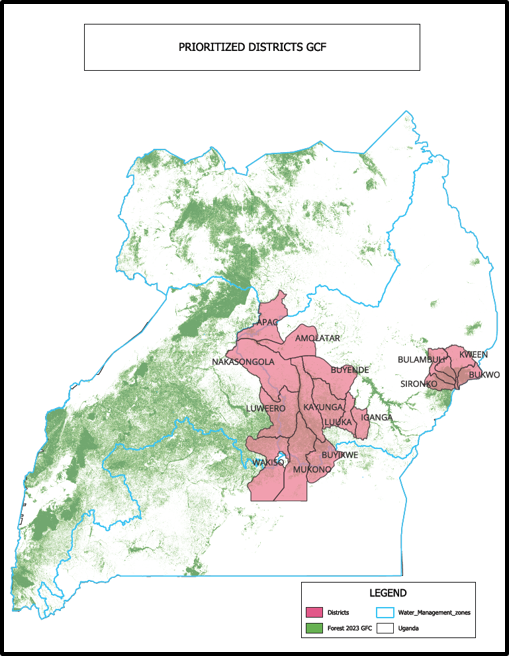
Final GCF REDD+ RBP Project_Summary_Uganda

This is the first REDD+ Results-Based Payment project in Africa to be presented to the GCF Board, positioning Uganda as a regional leader in climate mitigation and forest conservation.

659 KB Jan 2026
Download • 882 downloads