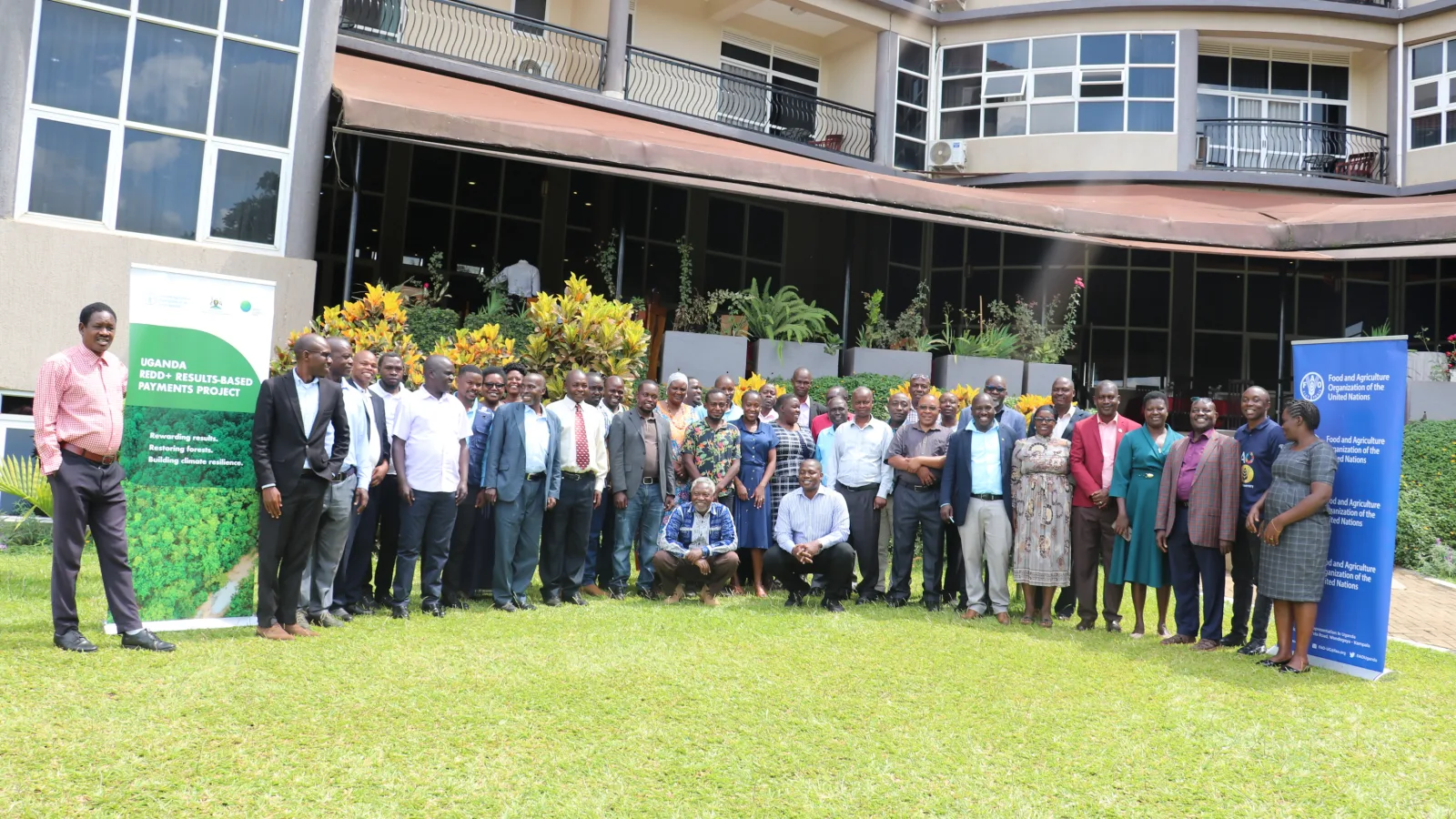
Mbale/Jinja, 20 November 2026 – The Ministry of Water and Environment (MWE), in partnership with the Food and Agriculture Organization of the United Nations (FAO), has intensified regional stakeholder consultations on Uganda's REDD+ Results-Based Payment Project, engaging communities and key stakeholders in the Elgon and Eastern regions.
The consultations, held in Mbale on 16th-17th November and Jinja on 19th-20th November 2026, brought together representatives of local governments, district natural resources departments, cultural and community leaders, Indigenous Peoples, forest-adjacent communities, civil society organisations, forest-based community enterprises and special interest groups.
The engagements provide platforms for stakeholders to share their views, concerns and recommendations on project implementation while strengthening local ownership, inclusive participation and knowledge-sharing arrangements.
They also seek to ensure that the rights, interests, traditional knowledge and livelihoods of Indigenous Peoples and local communities are recognised and protected throughout project implementation.
Uganda's REDD+ Results-Based Payment Project is funded by the Green Climate Fund (GCF) to the tune of USD 31 million and will be implemented over seven years by the Government of Uganda through the Ministry of Water and Environment, in partnership with FAO.
The funding recognises Uganda's achievement in reducing approximately 8.07 million tonnes of carbon dioxide equivalent (CO₂e) emissions from deforestation and forest degradation between 2016 and 2017. These emission reductions were measured and verified under the United Nations Framework Convention on Climate Change (UNFCCC) processes.
The project targets approximately 105,000 people across 17 districts, with about 21,000 potential beneficiaries expected to receive direct support through field-level interventions.
Speaking during the Jinja consultation, Edward Ssenyonjo, Principal Forest Officer at the Ministry of Water and Environment, said the project's enabling environment and REDD+ governance component would strengthen Uganda's institutional and technical capacity to implement REDD+ effectively, transparently and inclusively.
He noted that the component would focus on strengthening the Monitoring, Reporting and Verification (MRV) framework, improving the National Forest Monitoring System, enhancing safeguards reporting and aligning REDD+ implementation with Uganda's Nationally Determined Contributions (NDCs).
Joseph Mugaga Kirule, FAO National Project Coordinator, explained that the project's priority landscape investments component would translate results-based payments into practical interventions across forest and agricultural landscapes.
The proposed investments include 7,000 hectares under sustainable land management and agroforestry, 4,000 hectares for sustainable fuelwood and charcoal production, 3,000 hectares for pole and timber plantations, and 8,000 hectares for natural forest restoration.
These interventions are expected to restore degraded landscapes, enhance carbon removals and improve community livelihoods through better food security, diversified household incomes, green job creation, value addition and improved access to sustainable biomass energy.
Promoting inclusive and community-led forest conservation
The Ministry emphasised that inclusive participation would remain central to project implementation, with women, youth, persons with disabilities, Indigenous Peoples and other marginalised groups actively involved in decision-making and benefiting from project interventions.
The project will also strengthen community institutions, promote secure access to land and forest resources, and establish equitable benefit-sharing arrangements to ensure that communities directly involved in forest conservation realise tangible benefits.
Through collaboration between Government, development partners, local governments and communities, the project will contribute to reducing greenhouse gas emissions, conserving biodiversity, restoring degraded landscapes and strengthening ecosystem resilience.
The regional consultations are therefore an important step towards building consensus, strengthening stakeholder ownership and ensuring that Uganda's REDD+ results-based payments translate into meaningful environmental, social and economic benefits for communities.