
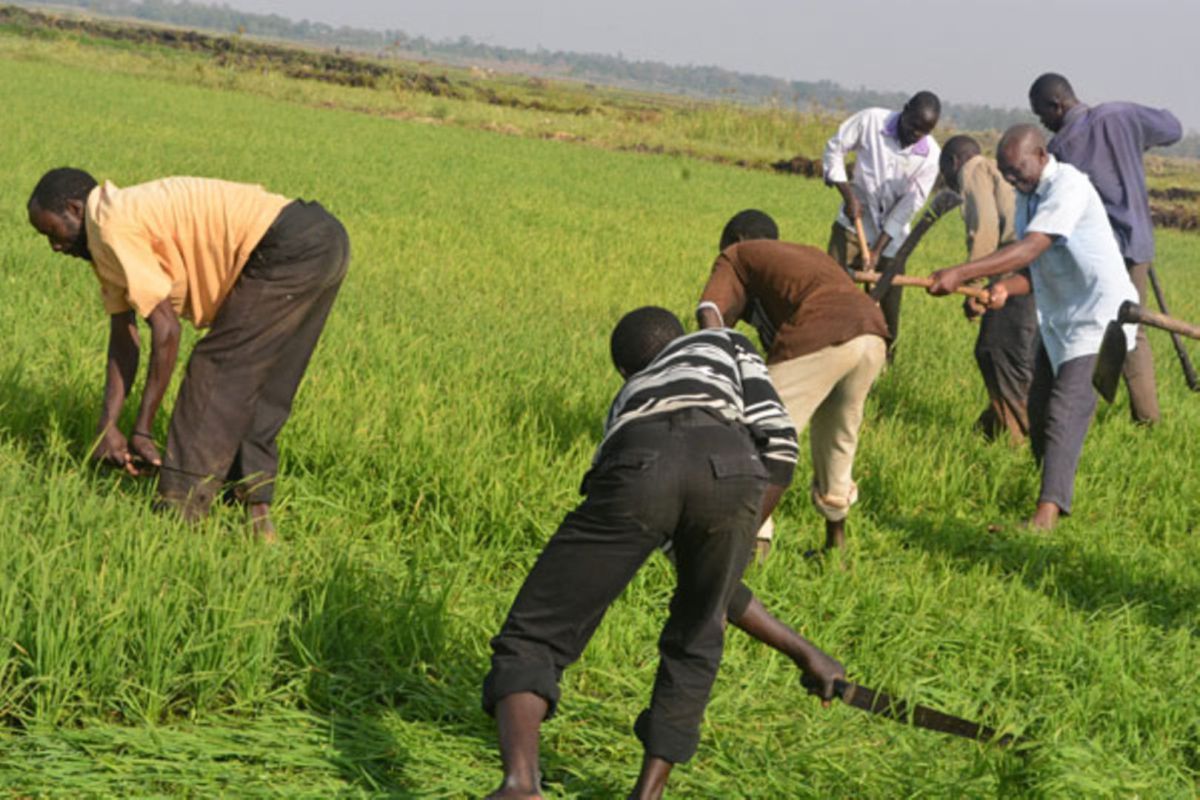
Mr Ali Mwongi is a resident of Natoto Central Village, Natoto Parish, Buseta Sub County, Kibuuku district. He has three wives with 35 children. He has no formal job save for farming. It is, therefore, crystal clear to comprehend why he previously earned a livelihood through degrading Limoto wetland. Mwongi operated up to 30 acres of land in the wetland, where his major economic activity was rice growing. In 2017, he received a heifer having voluntarily vacating the Limoto wetland.
Seven years down the road, the heifer has since multiplied four times. He gave out one calf to the next beneficiary. Two calves plus the mother were later sold to meet the basic needs, including paying school fees and scholastic materials, medical bills, and family well-being. He has also been able to acquire decent accommodation for three of his wives and their children. “I sold the mother because it had developed some sickness. I sold it at shs 1m. I was mainly benefiting from selling milk. I would get between 8-10 litres per day. A litre costs shs 1.2m,” he said.
According to Mwongi, as community members continued to receive more heifers, they conceived the idea of establishing a cooperative at the Buseta Trading Centre. With 200 members, the cooperative has since attracted funding from the Islamic Development Bank. Whereas Mwongi is benefiting from the project, his concern is that he needs to diversify the enterprise to enable him to meet the humongous needs of his family. “If the project can give me trees, I could plant them in the buffer zone. This is my request because I believe I can earn more income from that as well. This will also help with addressing climate change impacts,” he advises.