Project Overview
The Integrated Water Management and Development Project (IWMDP) is a Seven (7) year Government of Uganda (GoU) Project funded with a loan worth US $313 Million by the World Bank. The Project will support GoU through the Ministry of Water and Environment (MWE) and the National Water and Sewerage Corporation (NWSC) in achieving the United Nation’s Sustainable Development Goals (SDGs), including SDG #6, ‘Ensure availability and sustainable management of water and sanitation for all.’
Core Objective:
The primary objective of the IWMDP is to improve access to water supply and sanitation (WSS) services, strengthen capacity for integrated water resources management, and enhance the operational performance of water and sanitation service providers in project areas. This aims to ensure sustainable access to clean water and improved sanitation for a significant portion of Uganda’s population, particularly in vulnerable regions.
Funding and Implementation:
- The project is funded by the World Bank, primarily through the International Development Association (IDA), with an initial credit of US $280 million and an additional US $29 million from the IDA 18 Sub-Window for Refugees and Host Communities. Additional co-financing includes KfW (US$25 million) and GoU Counterpart financing (US$8 million).
- The Ministry of Water and Environment (MWE) and the National Water and Sewerage Corporation (NWSC) are the key implementing agencies, responsible for different components of the project.
- The project commenced in June 2019 and is currently projected to close in January 2026.
Project Area and Beneficiaries:
The IWMDP targets various areas across Uganda, with a significant focus on improving services in:
- Small towns and Rural Growth Centers (RGCs): These areas are critical for expanding access beyond major urban centers.
- Large towns: Especially those with significant populations and growing demand.
- Districts hosting refugees and host communities: Addressing the increased strain on water and sanitation infrastructure due to large refugee populations. This includes areas like Adjumani, Yumbe, Arua, Moyo (including Obongi), Lamwo, and Kiryandongo.
- Specific towns and regions mentioned in project documents and news include Busia, Gulu, Mbale, Kumi, Namasale, Koboko, Rakai, Kagadi, Kakumiro, Kaliro, Iganga (Namungalwe), Kyegegwa, and Ruyonza (Rukungiri).
The project is designed to benefit hundreds of thousands, if not millions, of Ugandans, including an estimated 1,075,000 people in Adjumani and Mbale alone, with long-term projections to serve even larger populations by 2040.
Key Components and Activities:
The IWMDP is structured around four main components:
- Water Supply and Sanitation (WSS) in Small Towns and Rural Growth Centers (RGCs) and Support to Districts Hosting Refugees:
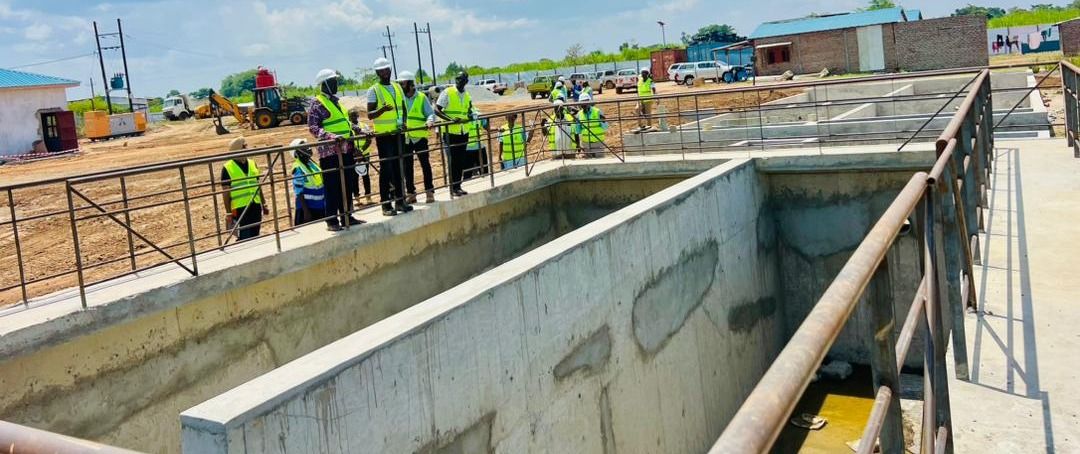
- Construction and rehabilitation of WSS facilities: This includes new water supply systems, expansion of existing ones, and improvement of sanitation infrastructure.
- Technical assistance to small towns: Supporting the preparation of fecal sludge management assessments and integrated sanitation plans.
- Support for refugee and host communities: Providing piped water supply and sanitation services in areas with significant refugee populations.
- Water Supply and Sanitation (WSS) in Large Towns:
- Construction and rehabilitation of WSS infrastructure in larger municipalities: This component is primarily implemented by NWSC to enhance services in growing urban centers like Mbale and Gulu, including the development of new water sources, treatment plants, transmission pipelines, and sewerage systems.
- Development of Faecal Sludge Treatment Plants (FSTPs): Improving urban sanitation by managing wastewater and fecal sludge.
- Water Resources Management:
- Strengthening institutional capacity for integrated water resources management (IWRM): This involves developing and implementing water management plans, monitoring water quality and quantity, and promoting sustainable use of water resources.
- Support for water source protection: Implementing measures to safeguard water sources and their catchments, ensuring long-term sustainability.
- Project Implementation and Sector Support:
- Project management and coordination: Ensuring efficient execution, monitoring, and evaluation of project activities.
- Capacity building: Strengthening the human and institutional capacities of MWE, NWSC, and local governments to manage water resources and deliver services effectively.
- Environmental and social safeguards: Implementing measures to mitigate any potential negative environmental and social impacts of project activities, ensuring compliance with World Bank and national standards. This includes the development and application of Environmental and Social Management Frameworks (ESMFs) and site-specific Environmental and Social Impact Assessments (ESIAs)/Environmental and Social Management Plans (ESMPs).